Pre intermediate 1 - session 1
Losing the Battle for Survival
Reading Passage
Invasive species are plants and animals that arrive in an area where they are not native, usually due to human activity. For example, a species of shellfish might attach itself to the outside of a ship traveling between countries and enter a new environment in this way. Invasive species are often able to grow quickly in their new homes because they have no natural enemies. As a result, they may replace or damage native plants and animals that live in the same environment. One example is the case of gray and red squirrels in Great Britain.
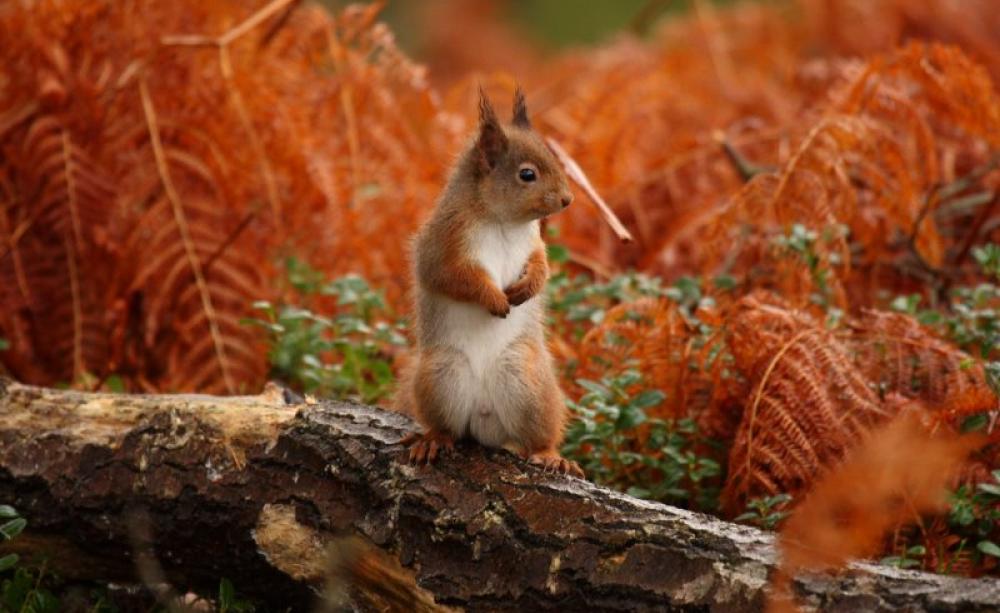
Red squirrels were once a common sight in British forests and countryside. Then, in the 1870s, gray squirrels were introduced from North America because rich people thought the squirrels looked fashionable on the grounds of their large homes. Since then, the grey squirrel population in Great Britain has grown whereas the number of red squirrels there has decreased. Today, only about 140,000 red squirrels remain, mostly in Scotland. In contrast, gray squirrels are now extremely common and seen as major pests due to the damage they cause to plants and houses. As a result, the red squirrels have been protected, but the gray squirrels can be legally trapped and destroyed.
At first sight, the two species of squirrels are physically similar. That can make it difficult to see why one is doing well and the other is suffering. They both have a long tail, which helps them balance when jumping from tree to tree. In addition, both kinds of squirrels have the same large eyes, small ears, and powerful back legs.
On the other hand, the two types of squirrels are different in body size and weight. The red squirrel has a typical head-and-body length of approximately 7.5 to 9 inches (19 to 23 centimeters), a tail length of 6 to 8 inches (15 to 20 centimeters) and a body weight of 9 to 12 ounces (250 to 340 grams). The gray squirrel is larger than the red squirrel. The head and body measure between 9 and 12 inches (23 and 30 centimeters), and the tail is between 7.5 and 10 inches (19 and 25 centimeters) long. Adult gray squirrels are also heavier, weighing between 14 and 21 ounces (400 and 600 grams). This size allows them to store more fat and helps them to survive hard winters, which could be fatal to their smaller cousins.
Three more differences explain why red squirrels have lost out in the competition with gray squirrels. First, red squirrels live high up in the trees, whereas gray squirrels spend more of their time on the ground. This means that loss of forest habitat has been more difficult for the red squirrel population. Another reason is that gray squirrels are more intelligent and can adapt to new situations more easily than red squirrels. For example, they have been able to survive in an urban environment because of their ability to use food provided by humans. A third problem for the red squirrel has been disease. Both squirrels carry the parapox virus. The virus does not seem to affect gray squirrels, but it has been fatal to red squirrels.
In conclusion, there does not seem to be much that scientists can do to help red squirrels survive in Great Britain. Some politicians support destroying populations of gray squirrels, but many British people have complained that this is cruel. Scientists have successfully reintroduced some red squirrels from other countries, and the animals could be protected in places where there are no gray squirrels, such as the Isle of Wight. However, some people have questioned whether red squirrels should be protected at all. Worldwide, they are not an endangered species. Considering the evidence, saving the red squirrel may be a waste of British government money. Government conservation funding should instead be spent on other endangered species.
Part 1: Reading Comprehension
1. Why were gray squirrels originally brought to Great Britain in the 1870s?
2. How does the size of the gray squirrel give it an advantage over the red squirrel?
3. Why do some people argue that the British government should stop funding the protection of red squirrels?
Part 2: Grammar Check (Present Perfect vs. Past Simple)
4. Which sentence correctly describes a specific completed event in the past?
5. Choose the correct time marker for this sentence: "The number of red squirrels has _____ dropped to about 140,000."
6. How should you complete this sentence? "When _____ the gray squirrels?"
Quiz Complete!
Your Final Score:


Comments
Post a Comment